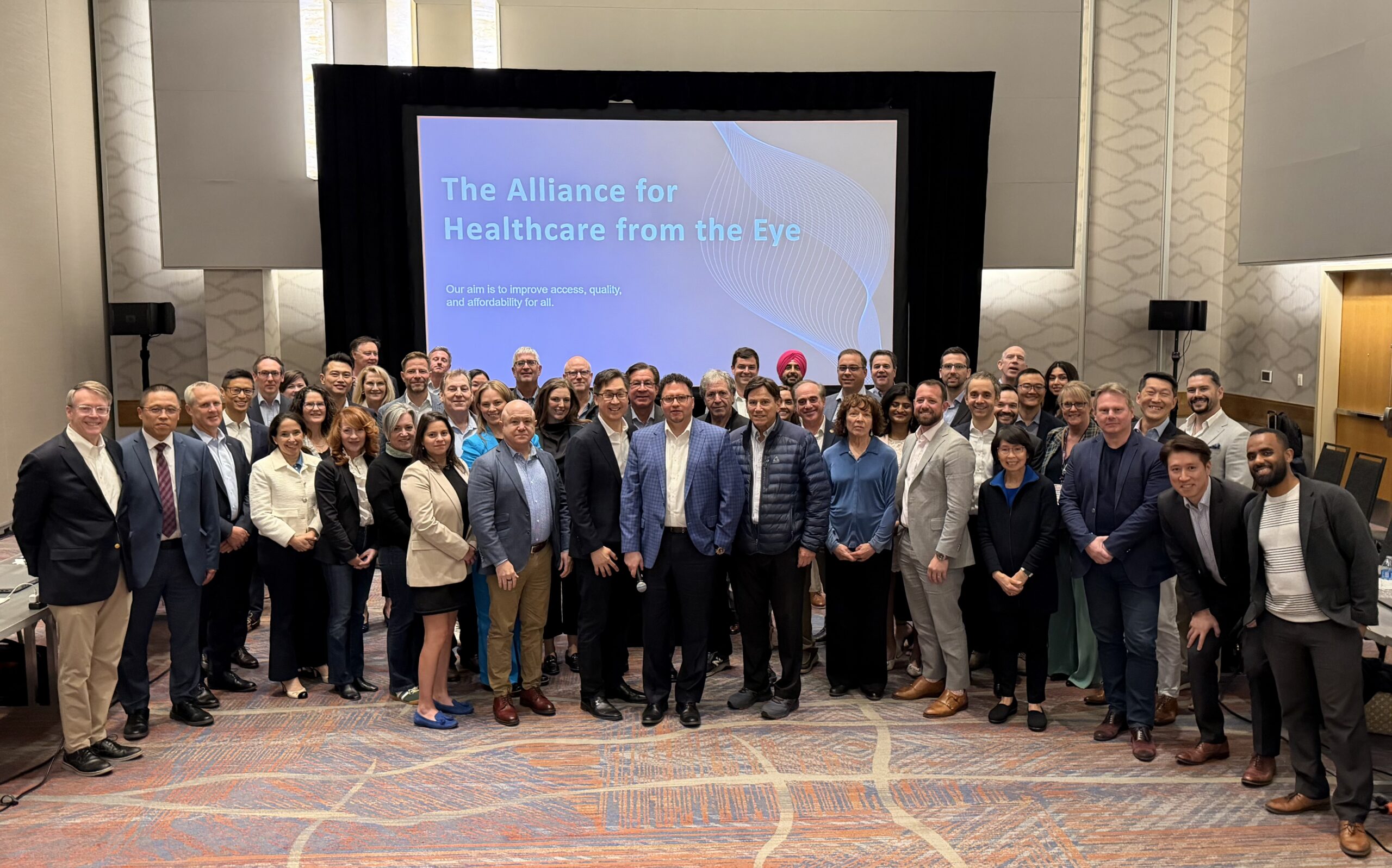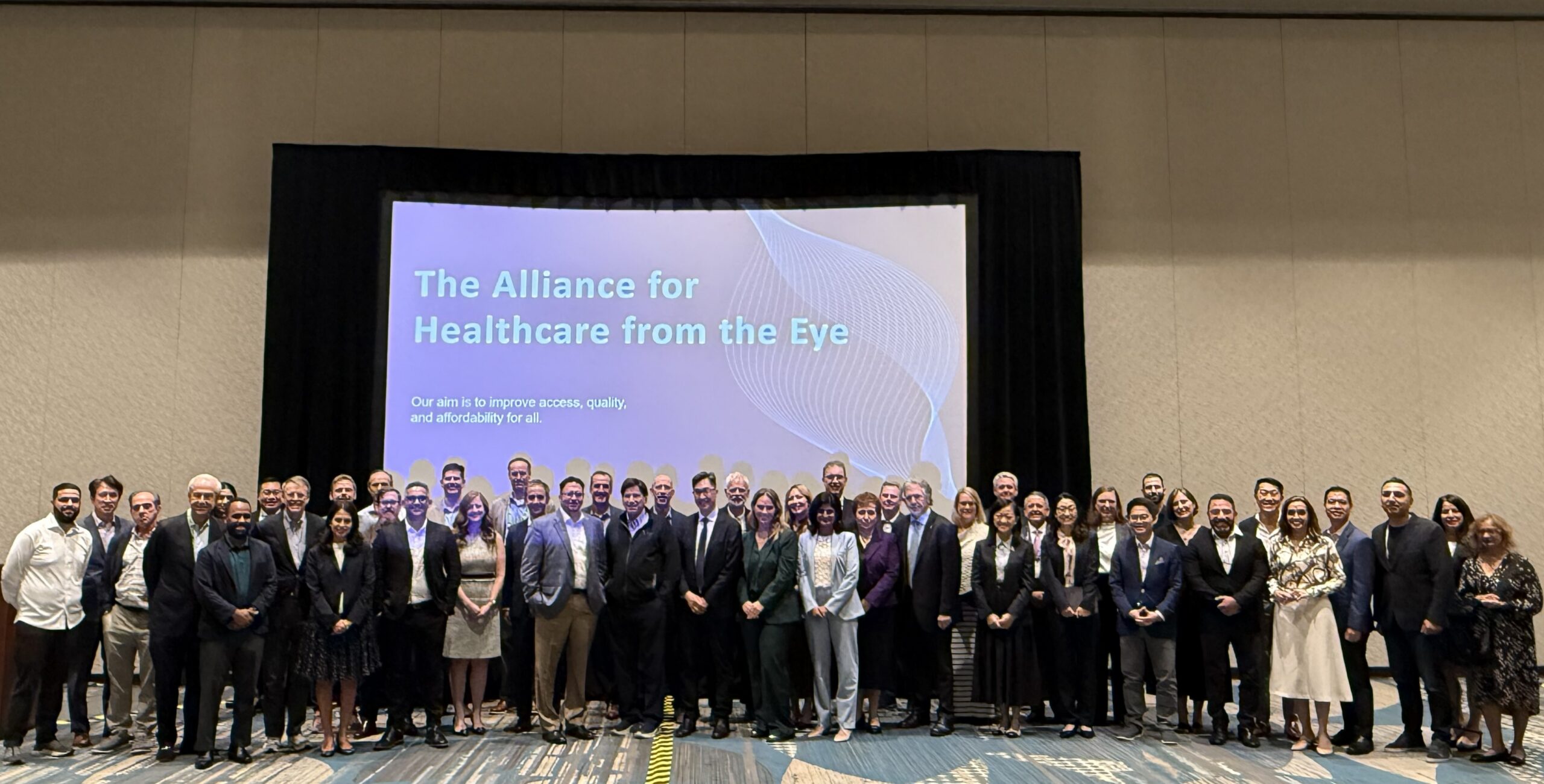
The Alliance for Healthcare from the Eye convened clinicians, industry leaders, regulators, payers, and health system innovators in Orlando on October 17, 2025, for a working meeting focused on advancing oculomics—the use of ocular data, particularly retinal imaging, to detect and manage systemic disease—and translating innovation into real-world impact.
The meeting underscored the Alliance’s growing role as a connector across traditionally siloed parts of healthcare, and its unique opportunity to shape how eye-based diagnostics are integrated into primary care, population health, and emerging rural health initiatives.
A Growing Alliance at a Pivotal Moment
Opening the meeting, Alliance leaders David Rhew and Robert Weinreb reaffirmed the Alliance’s mission: to reduce fragmentation in healthcare by leveraging the eye as a window into systemic health. Since its founding, the Alliance has expanded to include a broad and diverse membership spanning academia, clinical practice, technology, industry, payers, and regulatory expertise.
This growth comes at a critical time. Dr. Rhew highlighted the unprecedented $50 billion Rural Health Transformation initiative, a once-in-a-generation opportunity to modernize care delivery, improve access, and invest in sustainable health infrastructure—particularly in underserved communities. Participants discussed how oculomics-enabled screening and AI-driven diagnostics could play a meaningful role in state-level proposals by improving early detection, prevention, and chronic disease management.
Advances in Clinical Applications of Oculomics and AI
A central focus of the meeting was the expanding clinical evidence base supporting oculomics and AI-driven eye diagnostics across multiple disease areas.
- Cardiovascular, metabolic, and kidney disease:
Mike McConnell shared updates on Toku’s AI products, including BioAge, CLAiR Cardiovascular Risk, and My Kidney AI, highlighting results from a multi-site U.S. clinical trial and alignment with preventive care guidelines. - Neurologic disease screening:
Avantika Nadu presented MachineMD’s work using oculometric biomarkers and the NEOS device to screen for conditions such as multiple sclerosis and Parkinson’s disease, demonstrating how advanced analytics can extend neuro-ophthalmic expertise into primary and secondary care settings. - Behavioral health diagnostics:
David Zakariaie introduced Senseye’s mobile platform for diagnosing and monitoring PTSD, anxiety, and depression using ocular metrics and physiologic signals, describing progress toward FDA clearance and large-scale clinical validation.
Together, these examples illustrated how retinal and ocular data can move beyond eye disease alone to support earlier detection and more personalized management of systemic conditions.
Navigating Regulatory Pathways for Oculomics Innovation
Regulatory strategy was another key theme. Malvina Eydelman provided an in-depth overview of U.S. and global regulatory frameworks for software as a medical device (SaMD), with practical guidance on device classification, pre-market submission pathways, labeling considerations, and clinical evidence requirements.
Discussion emphasized the importance of:
- Clear labeling to define intended use and study design
- Robust analytical and clinical validation
- Early and collaborative engagement with regulators
- Lifecycle planning and real-world performance evaluation
Participants also explored opportunities for shared frameworks and standardized terminology to accelerate responsible innovation across the field.
From Innovation to Impact: Real-World Implementation
Moving from theory to practice, speakers shared lessons learned from deploying AI-enabled eye care solutions at scale:
- Michael Abramoff discussed the real-world implementation of autonomous AI for diabetic retinopathy screening, including the creation of new CPT codes, Medicaid coverage, and the importance of randomized clinical evidence.
- Andrea Cooley described UT Tyler’s rural health pilot in East Texas, mapping the full continuum from screening to treatment while addressing social determinants of health and long-term sustainability.
- Steve Martin highlighted IRIS’s connected eye care ecosystem, including telehealth integration, EMR connectivity, and scalable referral workflows designed to close care gaps.
These case studies reinforced that successful adoption requires not just technology, but thoughtful care pathways, reimbursement alignment, and cross-sector collaboration.
Aligning Around Rural Health Transformation
The meeting concluded with a call to action around the Rural Health Transformation initiative. Dr. Rhew outlined the aggressive timelines for state proposals and emphasized the need for measurable outcomes, clear narratives, and durable infrastructure to ensure long-term success.
The Alliance discussed forming a broad collaborative—bringing together technology companies, providers, payers, retailers, and nonprofits—to support state Medicaid leaders in designing outcome-driven programs that leverage oculomics and AI to improve population health.
Looking Ahead
Participants also explored future priorities, including:
- Expanding patient and provider education around eye-based diagnostics
- Parallelizing regulatory and reimbursement pathways to shorten time-to-impact
- Incorporating patient stories and advocacy to build trust and adoption
- Extending oculomics further into prevention, disease interception, and systemic care
The October meeting reinforced the Alliance’s role as a neutral convening platform where innovation, policy, and implementation meet—and where the eye can serve as a powerful gateway to better, more connected healthcare.